
In this article, we will explore in a realistic framework why forming connections has become so difficult, what its roots are, and what can be changed. Afterwards, we will discuss ways of forming genuine relationships in city life that are both possible and more “human” than you might think. We will also gently incorporate the small but impactful experiences that take place at DineWho’s table into this framework.
Having Difficulty Building Connections: Causes and Roots
Childhood Habits
For many people struggling to form connections, yetişkinlikte aniden ortaya çıkan bir durum değil. Çocuklukta öğrenilen ilişki biçimleri, bugün kurduğun ya da kuramadığın yakınlıkların arka planını oluşturuyor. Evde duygular açıkça konuşulmadıysa, sen de yetişkinlikte duygudan çok “mantık” üzerinden iletişim kurmaya yatkın olabiliyorsun.
In some families, when a child asks a question, the answer is “never mind.” In others, when an argument breaks out, everyone retreats to their rooms and the topic is never brought up again. For someone who grew up in such environments, talking about uncomfortable subjects can become almost impossible. This, in turn, leads to settling for smooth but superficial relationships rather than deep connections in the future.
When people talk about their past experiences at the DineWho table, these childhood scars often emerge. Hearing someone who lives in the same city, with a similar feeling of loneliness, use very familiar phrases helps to recognise these roots and reinforces the feeling of “So it's not just me.”.
The Role of a Closed Personality
Not everyone has to be equally social. Some people get energy from crowds, while others prefer a quiet chat with one other person. Despite this, many people with introverted temperaments, struggling to form connections It accidentally translates the emotion into the thought, “There's something wrong with me.”.
However, the issue is often not about changing one's nature. The real need is to find spaces for relationships that suit one's nature. Quiet, non-judgmental environments where conversation doesn't feel rushed open up breathing space for introverted people. In such an environment, the pressure to “say something fun right now” decreases, and reality reveals itself more comfortably.
So, when someone with an introverted disposition sits down at a DineWho table, they are more often met with small, curious glances rather than a rapid-fire barrage. In such environments, even those who are not in a hurry to speak eventually open up at their own pace.
Loneliness Dynamics in Urban Life
Adulthood struggling to form connections, it's almost a structural issue for city dwellers. People get into the same crowds commuting to work, grab coffee from the same cafes, and use the same metro lines. But as familiar faces increase, intimacy doesn't grow at the same rate.
In big cities, people:
- He's finding it difficult to find the energy to socialise between long working hours.
- Friendship can be disregarded as a “childish need”.
- It can be difficult to find a safe space to meet new people.
- Moves and job changes can mean having to constantly reset relationships.
When these dynamics combine, it becomes easy to feel both surrounded and alone in the city at the same time. In such times, thoughtfully curated, intentional gatherings create breathing space for people. Those who sit at the table during DineWho gatherings get the opportunity to look at their own stories from the outside when they see different faces of the city, carrying the same sense of loneliness, side by side.

Developing Social Skills and Struggling to Connect in Adulthood
Moving from Small Talk to Deep Dialogue and Struggling to Connect
Many people don't have a problem with “meeting new people.” Initial introductions, asking for names, and making a few sentences about what they do usually go smoothly. However, the issue moves on from here To have a deep conversation When it reaches the point, struggling to form connections the feeling intensifies.
Because the transition from small talk to deep dialogue often triggers the following questions:
- “How open can I be, considering we've only just met?”
- “Is the person in front of me genuinely interested, or are they just listening out of politeness?”
- “Do I look too serious?”
When the DineWho table includes questions and themes that support flow, the transition becomes more natural. The conversation finds a smooth bridge away from the lines of “Where are you from, what do you do?” towards real questions like “What has been challenging you the most recently?”. When people feel this bridge is ready, it becomes easier to share their inner world.
The Obstacle of Expectations and Fears
Making friends as an adult feels more complicated than it did during adolescence or university years. This is because different expectations and greater fears are now in play. Many people withdraw before even making a move, thinking, “Everyone already has a full social circle, why would they want me?”.
Furthermore, while avoiding the possibility of disappointment, people can unknowingly trap themselves in loneliness. Internal monologues like, “Would it be weird if I messaged them?”, “Would it seem strange if I suggested meeting up?” cause many new friendships to end before they even begin.
At this point, sitting down at a table with the intention of meeting and conversing already established offers significant relief. When people come to DineWho gatherings, they know that everyone at the table is there with a similar aim. Thus, taking the first step ceases to be a one-sided act of courage and transforms into a shared intention.
Mental Barriers When Entering New Environments
Struggling to connect It's often more about the internal dialogue than external circumstances. The sentences that go through your mind just before entering a new environment significantly affect physical comfort and relational courage.
For example, many people think the following:
- “What if I look like a boring person?”
- “What if I can't think of anything interesting to talk about?”
- “What if everyone there already knows each other?”
These thoughts are not reality itself; they are merely possibilities. Yet the body perceives these possibilities as real. Consequently, the heart races, the shoulders tense, and the person withdraws even before entering the room.
In areas with clear curation and obvious intent, like DineWho, these barriers become more manageable. This is because when people sit at the table with the feeling of “I'm here to get to know and be heard, not to impress anyone today,” the mental noise naturally quiets down a bit.
Modern Obstacles to Intimate Relationships
Social Media and Superficial Connections
Today, we are in constant contact with dozens, sometimes hundreds, of people on our screens. Stories, posts, likes, messages… All of these look “social.” Despite this, adult loneliness has become an experience heard more often than ever before.
Bonds formed on social media are often based on a safe distance. Desired aspects are shown, undesired ones are hidden. In such an order, it becomes difficult to make room for dialogues that carry real vulnerability, confusion, and unhappiness. Consequently, as people look at each other's lives from afar, they are left alone with a growing emptiness within.
This is precisely why face-to-face meetings have a different value. DineWho's face-to-face structure opens a space where phones are slowly put aside and eye contact still carries meaning. Thus, people step into an experience with fewer filters and more honest sentences.
Trust Issues, Vulnerability, and Difficulty Connecting
After a certain point struggling to form connections, This stems not simply from shyness or reticence, but directly from a sense of mistrust. For someone who has previously experienced betrayal, disappointment, or ridicule, opening up again doesn't come easily.
Fragility is often perceived as weakness in modern life. However, the path to forming genuine relationships lies precisely through that fragility. Being able to say “I'm not okay,” “I don't understand this,” or comfortably using the word “I don't know” opens the door to real intimacy.
In environments where they feel safe, people realise, as they are exposed in small doses: “Not showing my vulnerable side doesn't protect me, it just leaves me more alone.” At DineWho tables, people don't tell their life story from beginning to end on the first date. However, as small, true sentences are exchanged, a sense of trust gradually takes root.
Time Management and Intensity
Adulthood Making friends Making time for it, seems like a luxury to most people. Work, traffic, family responsibilities, hours spent in front of screens, and the day ends. The sentence, “I haven't seen my friends for a long time,” is almost accepted as a normal situation.
Yet the weakening of bonds often occurs not with a dramatic event, but with a heap of minor neglects. Postponed meetings, unanswered messages, constant “let's meet sometime” phrases... All of these slowly push relationships to the background.
Despite this table, it's planned and outlined Social event suggestions Being part of it makes things easier. When people say, “I'm dedicating two hours this evening to a table where I can truly rest and talk,” time management becomes a concrete choice. Clearly scheduled and intentional gatherings like DineWho add small but effective bridges into busy lives.
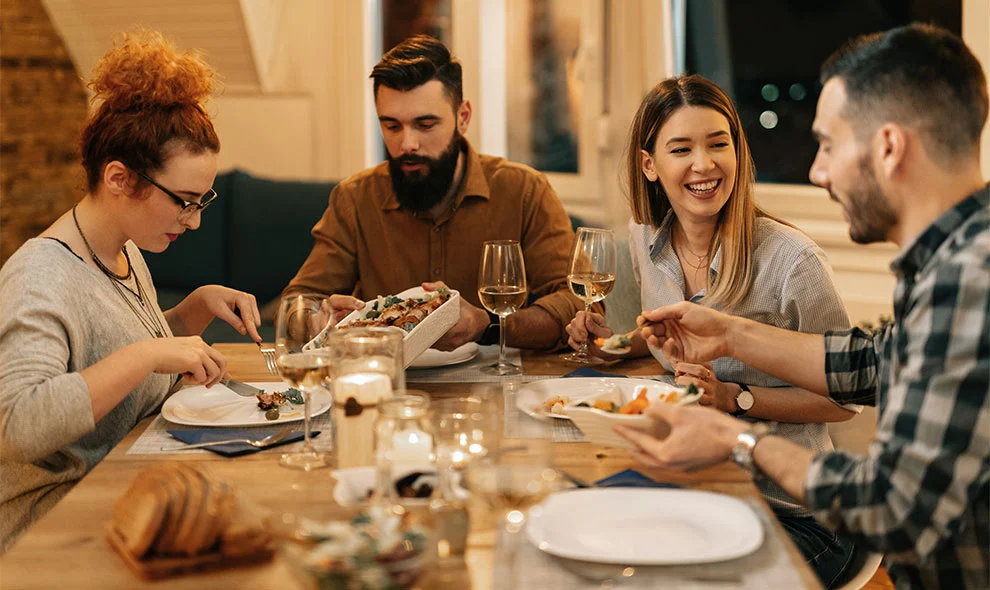
Solutions: Saying Goodbye to Difficulty Building Real Connections and Networking in the City
Awareness and Courage: Facing the Challenge of Connection
Change often starts with just honestly saying the following sentence: “Yes, struggling to form connections ”it's in my life." This realisation doesn't magnify the problem; on the contrary, it diminishes it because it makes space for it. That's because dealing with a named situation is always easier than dealing with an undefined unease.
Then small but concrete steps come into play. It can be useful to ask yourself here:
- Who do I want to get a little closer to right now?
- In which environment do I feel less restricted?
- Which type of conversation truly nourishes me: deep, fun, creative?
These questions guide you to look more clearly at both your current relationships and the new connections you want to build. This allows you to focus on chosen areas that benefit you, rather than random socialising efforts.
Opening Up to Social Experiences
In the city to make social connections, This often doesn't require strong and decisive steps. Generally, small but consistent moves work better. What's important here isn't to completely throw yourself out of your comfort zone, but to gently expand it.
For example:
- Sending a short message to someone you haven't spoken to in a long time.
- Attending a small workshop or event in an area you're interested in.
- Once a week, schedule a face-to-face chat instead of a screen.
- Intending to have a meaningful conversation with even a single person in crowded environments.
None of these steps are trying to create a miracle. But all of them are slowly strengthening the muscle of connection. Focused experiences like DineWho support this process with a ready-made table and like-minded people.
Struggling to Make New Friendships and Connections on Masada with DineWho
Let's consider Aslı. She lives in Istanbul, is 31 years old, successful in her career, but secretly thinks, “I don't think I've ever truly connected with anyone.” She's active on social media, works in a busy office, and doesn't sit idle at weekends. Yet, when she returns home in the evenings, she feels there are few people whose lives touch hers.
One evening, without thinking too much, he signs up for one of the DineWho meetings. Her intention is not a big change; she just wants to say “Let me sit at a different table this time”. On the day of the meeting, there are people at the table who live in the city like her, from different sectors. The conversation is light at first, then gradually deepens.
At one point, someone at the table says, “I've also been carrying this feeling of struggling to connect for a long time.” There's a brief silence at the table, followed by a few people nodding. No miracle happens that evening; no one suddenly becomes best friends. However, as Aslı heads home, she realises: “There really are people who say the same things as I do, and it's not that difficult to sit next to them.”
At DineWho’s table, curation brings people together not randomly, but with a shared curiosity and openness. The atmosphere is neither as intense as a therapy session nor as scattered as a casual social event. Gentle questions guide the conversation, allowing everyone to open up at their own pace. Thus, Ways to build genuine relationships is becoming more accessible.
While these kinds of experiences don't solve all problems on their own, they do show people that “difficulty forming connections” isn't a fixed identity, but rather a situation that can be worked upon. It's possible to continue having coffee with someone you met at the table, or to simply carry the warmth of that evening with you.
Mini Checklist: Taking a Step Today
At the end of the piece, you might want to do a little check-in with yourself. As you go through the following list, it's enough to just think “yes / no / not sure yet” to yourself:
- I want to have at least one person with whom I can share my feelings.
- In the city Meeting new people I'm looking for environments where I feel safe.
- I intend to make a bit more room for face-to-face conversations instead of screen time.
- Developing social skills I am ready to take small but sustainable steps.
- Being at a curated, warm and non-judgemental table could do me good.
If you can give a heartfelt “yes” to even a few of these points, you've actually already taken action. Because the real turning point begins the moment you stop seeing loneliness as “destiny” and decide to try new paths, however small.
It's true that building meaningful connections in the city can be difficult; it's not impossible. The feeling of loneliness is a dark companion to being human; yet it's also a feeling that can be transformed. When a bit of space is made for oneself, for others, and for the table, most people can slowly change that familiar sentence running through their minds.
Perhaps you too would like to take a step from the point where you say, “I couldn't connect with anyone,” towards the sentence, “I think I was able to truly meet some people.” You don't have to make grand plans to do this; sometimes a single evening, a single table, a single honest sentence is enough to ease the feeling. Try to find yourselves at the same table with new faces in this experience, just once.


 English (UK)
 Türkçe